Organic Spices Guide
By the Organic Turmeric Sourcing Team · Updated August 20, 2026 · 9 min read
Search "haldi powder organic" today and you will find everything from small Etsy jars to pallet-sized export listings, and the quality gap between them is enormous. Some of what's labeled organic never touched an accredited certifier. Some of it has barely any curcumin, the compound that gives turmeric most of its reputation. This guide cuts through the noise so you know exactly what you are buying, whether you are stirring a spoonful into golden milk at home or sourcing a container load for a supplement line.
Quick answer: Haldi powder organic is turmeric grown without synthetic pesticides or fertilizers, verified by a certifier such as USDA Organic or India's NPOP, and lab-tested for curcumin content and contaminants. Before buying, ask for a current organic certificate, a Certificate of Analysis (COA), and the country of origin.
What Does "Haldi Powder Organic" Actually Mean?
"Haldi" is simply the Hindi word for turmeric, so haldi powder organic and organic turmeric powder describe the exact same product. The word that does the real work here is "organic." To legally carry that label in the US market, the turmeric must be grown on land free of prohibited synthetic inputs for a set transition period, handled without irradiation, and inspected by an accredited certification body.
In practice, that means no synthetic pesticides sprayed on the crop, no chemical fertilizers pushed into the soil, and no genetically modified planting stock. The farmer instead relies on compost, crop rotation, and natural pest deterrents. Every shipment leaving the farm should be backed by a transaction certificate that a customs officer, a retailer, or a curious customer can verify.
How Haldi Powder Organic Is Made, Step by Step
Good haldi powder organic is a product of patience as much as agronomy. Here is the process most certified producers follow, from the field to the jar:
From Root to Jar: How Haldi Powder Organic Is Made
Hand-Harvesting
Mature rhizomes are dug by hand roughly eight to nine months after planting, once the leaves have yellowed and dried back.
Boiling & Curing
Fresh rhizomes are briefly boiled to soften the outer skin and lock in color before the drying stage begins.
Sun-Drying
Cured turmeric fingers are spread out and sun-dried for one to two weeks until moisture drops to a safe storage level.
Stone-Grinding
Dried fingers are cleaned and stone-ground into a fine powder, a slower method that helps protect aroma and curcumin compared with high-heat industrial milling.
Lab Testing & Certification
Each batch is tested by an accredited lab for curcumin percentage, pesticide residue, and microbial load, then packed under its organic certificate.
Exact timelines shift slightly by region, harvest size, and monsoon patterns.
Haldi Powder Organic vs. Conventional Turmeric Powder
On a spice rack, organic and conventional turmeric powder can look nearly identical. The real differences show up in how the crop was grown, how it was tested, and what a buyer can actually verify after the fact.
Haldi Powder Organic vs. Conventional Turmeric Powder
Typical ratings based on what each certification tier requires, not laboratory results for any single product.
None of this means conventional turmeric is unsafe. It simply means the burden of proof sits with the buyer. With haldi powder organic, that proof is built into the supply chain by design.
Curcumin Content: What to Look for in Haldi Powder Organic
Curcumin is the bright yellow compound responsible for most of turmeric's color and its therapeutic reputation, and it is measured by HPLC (High-Performance Liquid Chromatography) at an accredited lab. The result appears on the Certificate of Analysis, and it is the single number that matters most when comparing two jars of haldi powder organic.
Curcumin Content by Haldi Powder Organic Grade
Culinary Grade
Standard Organic
High-Curcumin
Extract-Grade
Ring fill shows relative curcumin level on a 0–12% scale. Always request the HPLC-based COA to confirm the actual figure for your batch.
For everyday cooking, 3% to 5% curcumin is perfectly normal and matches what home cooks in India have always used. If you are formulating a supplement or standardizing a finished product, you will usually want haldi powder organic in the 5% to 7% range, since it is high enough for a meaningful label claim while still coming from whole-root powder rather than an isolated extract.
Health Benefits Backed by Curcumin Research
Curcumin is one of the most studied plant compounds in the world, and the interest in haldi powder organic among US shoppers largely traces back to what that research has found:
Calms Everyday Inflammation
Curcumin is regarded as one of the more potent natural anti-inflammatory compounds identified in plant research, working through several of the same pathways targeted by certain anti-inflammatory medications, though without the same side-effect profile. For people managing low-grade, chronic inflammation, a daily habit of cooking with haldi powder organic is a gentle, food-first place to start.
Fights Oxidative Stress
Curcumin neutralizes free radicals directly and also appears to encourage the body's own antioxidant enzyme activity. That combination helps protect cells from the kind of oxidative wear-and-tear linked to aging and a range of chronic conditions.
Eases Joint Discomfort
Clinical research on curcumin supplementation has repeatedly shown improvements in joint stiffness and mobility, particularly for people managing knee osteoarthritis, a condition that affects a large share of American adults over 50. Because haldi powder organic delivers curcumin inside its natural root matrix rather than as an isolated extract, many practitioners consider it a gentler starting point.
Supports a Balanced Immune Response
Curcumin has documented antimicrobial and immune-regulating properties, helping modulate immune-cell activity rather than simply revving it up. This is part of why turmeric tea and golden milk made with haldi powder organic remain a go-to winter remedy in households across India.
Backs Brain and Heart Health
Research links curcumin to higher levels of BDNF (brain-derived neurotrophic factor), a protein tied to memory and mood regulation, and to improved endothelial function relevant to cardiovascular wellness — the top health concern among American adults.
Curcumin absorbs poorly on its own. A pinch of black pepper (piperine) alongside a little healthy fat can boost absorption dramatically — one well-known human study found an increase of roughly 2,000%.
Spotting Genuine Haldi Powder Organic (and Avoiding Fakes)
Because "organic" and "haldi" have both become popular marketing words, not every jar that uses them is telling the truth. Here is a quick way to tell the difference before you commit to a purchase:
Spotting Genuine Haldi Powder Organic
Genuine Signs
- Deep, warm golden-orange color, not overly bright yellow
- An earthy, slightly peppery aroma when the jar is opened
- Current organic certificate and COA available on request
- Fine but not chalky texture, with no gritty film in water
- Packaging lists country of origin and a batch or lot number
Warning Signs
- Unnaturally bright, almost neon-yellow color
- Little to no aroma, or a musty, chemical-like smell
- Seller cannot provide any certificate or lab report
- Turns water bright red-orange or leaves heavy sediment
- No batch number, harvest date, or origin listed anywhere
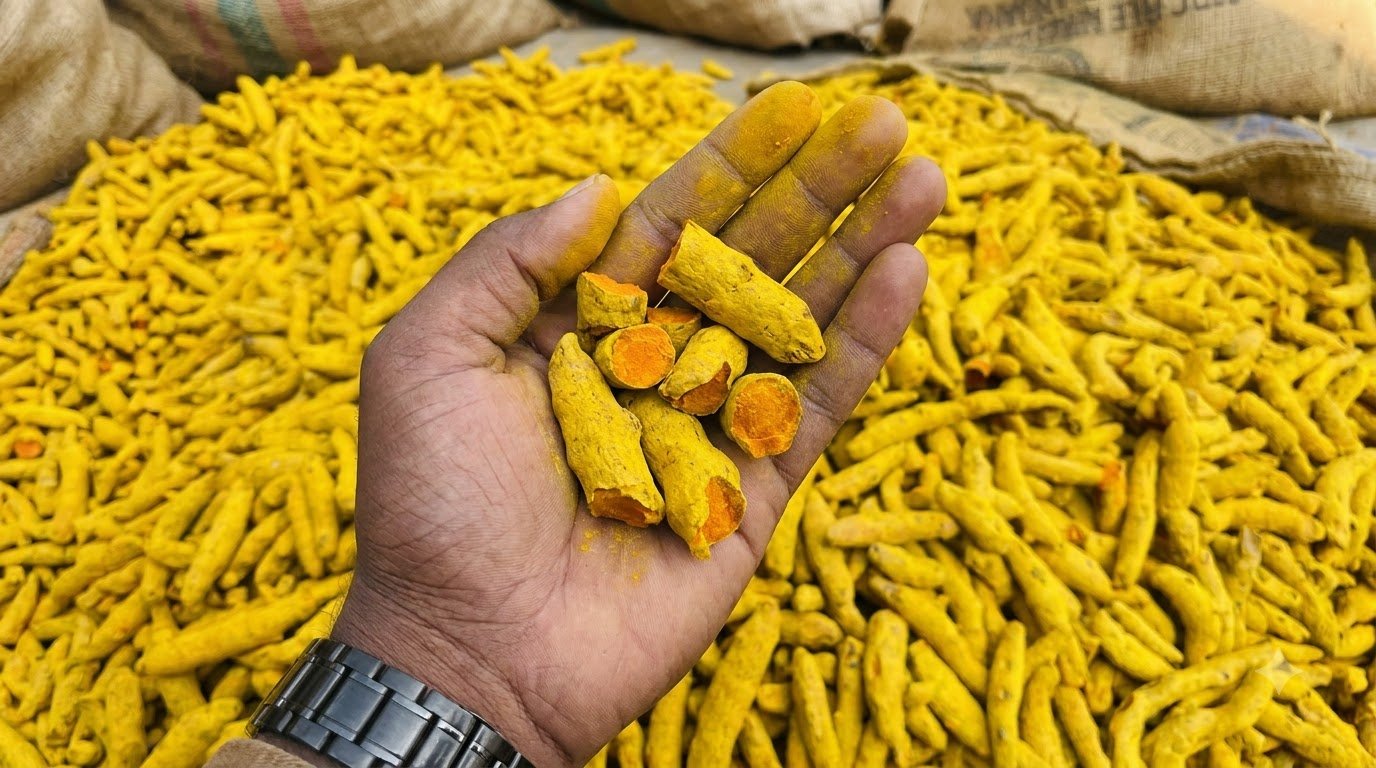
Why US Buyers Choose Farm-Direct Haldi Powder Organic
Distributors still play a role in the spice trade, but a growing number of American brands, importers, and even serious home cooks now prefer to source haldi powder organic directly from a certified Indian exporter. A few reasons come up again and again:
- Fresher harvest. Direct shipments cut out extra warehouse stops, so the powder you receive is closer to its actual drying date.
- Real traceability. A direct relationship means you can ask which farm, which harvest, and which lab report belongs to your order.
- Custom specifications. You can request a specific mesh size, curcumin grade, or steam-sterilization for markets with stricter microbial limits.
- Complete export paperwork. Reputable exporters provide a phytosanitary certificate, an organic transaction certificate, and APEDA registration details with every shipment.
If you want a closer look at export logistics and certification paperwork, our companion piece on organic haldi sourcing walks through the shipping and documentation side in more depth.
Simple Ways to Add Haldi Powder Organic to Your Routine
- Golden turmeric latte: Whisk ½ teaspoon of haldi powder organic into warm milk with a pinch of black pepper and a little honey.
- Morning smoothie boost: Blend a small pinch into a mango or pineapple smoothie for color and a mild earthy note.
- Roasted vegetable rub: Toss cauliflower, carrots, or potatoes with oil, haldi powder organic, and cumin before roasting.
- Weeknight dal or curry base: Bloom a spoonful in warm oil at the start of cooking to build flavor from the ground up.
- DIY brightening mask: Mix with plain yogurt or honey for an occasional face mask — patch-test first, since it can temporarily stain skin.
Storing Haldi Powder Organic the Right Way
Haldi powder organic is forgiving, but a little care goes a long way. Keep it in an airtight glass jar away from direct sunlight and heat; a cool, dark pantry shelf beats a spot above the stove. Stored properly, dry haldi powder organic holds its color, aroma, and curcumin content for up to about two years. Skip the refrigerator, since condensation from temperature swings can cause clumping and, over time, mold.
Frequently Asked Questions
What is haldi powder organic?
Haldi powder organic is turmeric root that has been dried and ground into powder without synthetic pesticides, chemical fertilizers, or irradiation, then verified by an accredited certifier such as USDA Organic or India's NPOP program. It comes from rhizomes grown in soil that has stayed free of prohibited inputs for at least three years, and most batches can be traced back to the farm that grew them.
Is organic haldi powder the same thing as regular turmeric powder?
Not exactly. Both come from the same plant, Curcuma longa, but regular turmeric powder can be grown with synthetic pesticides and fertilizers and is rarely tested for residues. Haldi powder organic is grown under a certified organic system, tested for residues and heavy metals, and typically ships with a lab report proving its curcumin content.
How can I tell if a haldi powder is genuinely organic?
Ask for three things: a current organic certificate from the seller, a Certificate of Analysis (COA) showing curcumin percentage and residue testing, and information about where the turmeric was grown. If a brand or supplier cannot produce any of these, treat the organic claim with caution.
How much curcumin does haldi powder organic usually contain?
Most haldi powder organic sold for everyday cooking contains 3% to 5% curcumin. Powder intended for supplement manufacturing is usually standardized between 5% and 7%, and high-curcumin lots used for extracts can reach 9% to 12%. The exact figure should always appear on the supplier's COA, since curcumin content varies by harvest and processing method.
Is it safe to eat haldi powder organic every day?
For most healthy adults, 1 to 3 grams of haldi powder organic a day in food is considered safe and is roughly the amount used in traditional cooking. If you take blood-thinning medication, have gallbladder disease, or have surgery scheduled, talk with your doctor before adding concentrated curcumin supplements, since curcumin can interact with certain medications.
Where can US buyers source haldi powder organic in bulk?
US brands and importers typically source haldi powder organic either through a domestic organic spice distributor or directly from a certified exporter in India. Buying direct usually means better traceability, a fresher harvest, and the ability to request a specific mesh size or curcumin grade, along with full export documentation such as a phytosanitary certificate and an organic transaction certificate.
How should I store haldi powder organic once opened?
Keep it in an airtight glass container away from direct light, heat, and humidity, since a cool pantry shelf works better than a rack above the stove. Stored this way, haldi powder organic holds its color, aroma, and curcumin content for up to about two years. Skip the refrigerator, since condensation can cause clumping.
Final Thoughts
Haldi powder organic is not just another pantry trend. It is a certified, lab-tested version of a spice Indian households have relied on for millennia, now held to a standard that a US buyer can actually verify. Whether you are adding a nightly spoonful to warm milk or sourcing pallets for a supplement brand, the checklist stays the same: confirm the certificate, request the COA, know the curcumin percentage, and buy from a supplier willing to name the farm.
Get that right, and haldi powder organic earns its place as one of the simplest, most well-researched upgrades you can make to a kitchen shelf or a product line.